


The Undercarriage Failure
Undercarriage failure is one of the most dreaded unforeseen expenses on a job site. According to key OEM data, the track system can represent up to 50% of the total maintenance costs of an earthmoving machine.
Unlike the engine, which operates protected within its compartments, the undercarriage is a “planned wear” system that battles the abrasion of mud, rock, and debris every second. Fortunately, it is possible to intervene promptly starting with a conscious visual inspection.
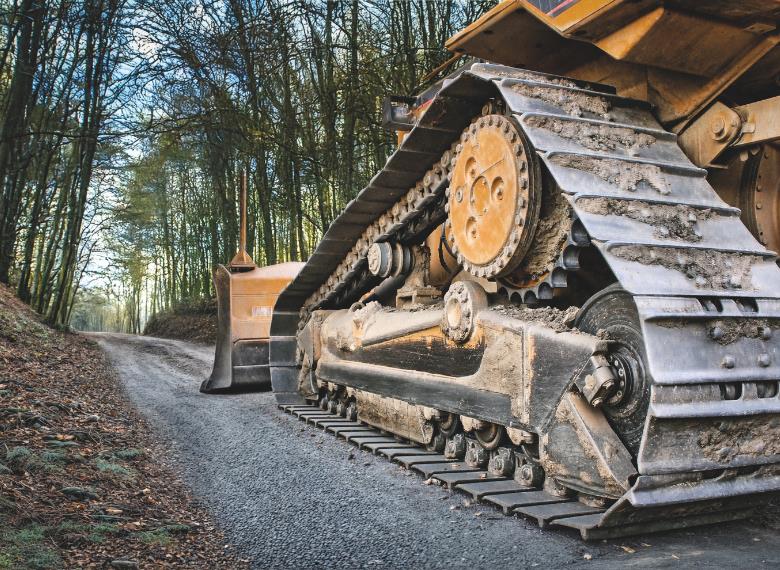
Why Undercarriage Wear is a “Domino Effect”
Component wear follows a chain reaction. If a single bottom roller seizes, the chain begins to slide instead of rolling, creating a flat spot on the roller and prematurely wearing down the track links.
Identifying the first worn component early means breaking this vicious cycle before it turns into a major expense due to machine downtime.
The “Big Four” of the Undercarriage: Know Your Components
Before inspecting, we must understand the key players:
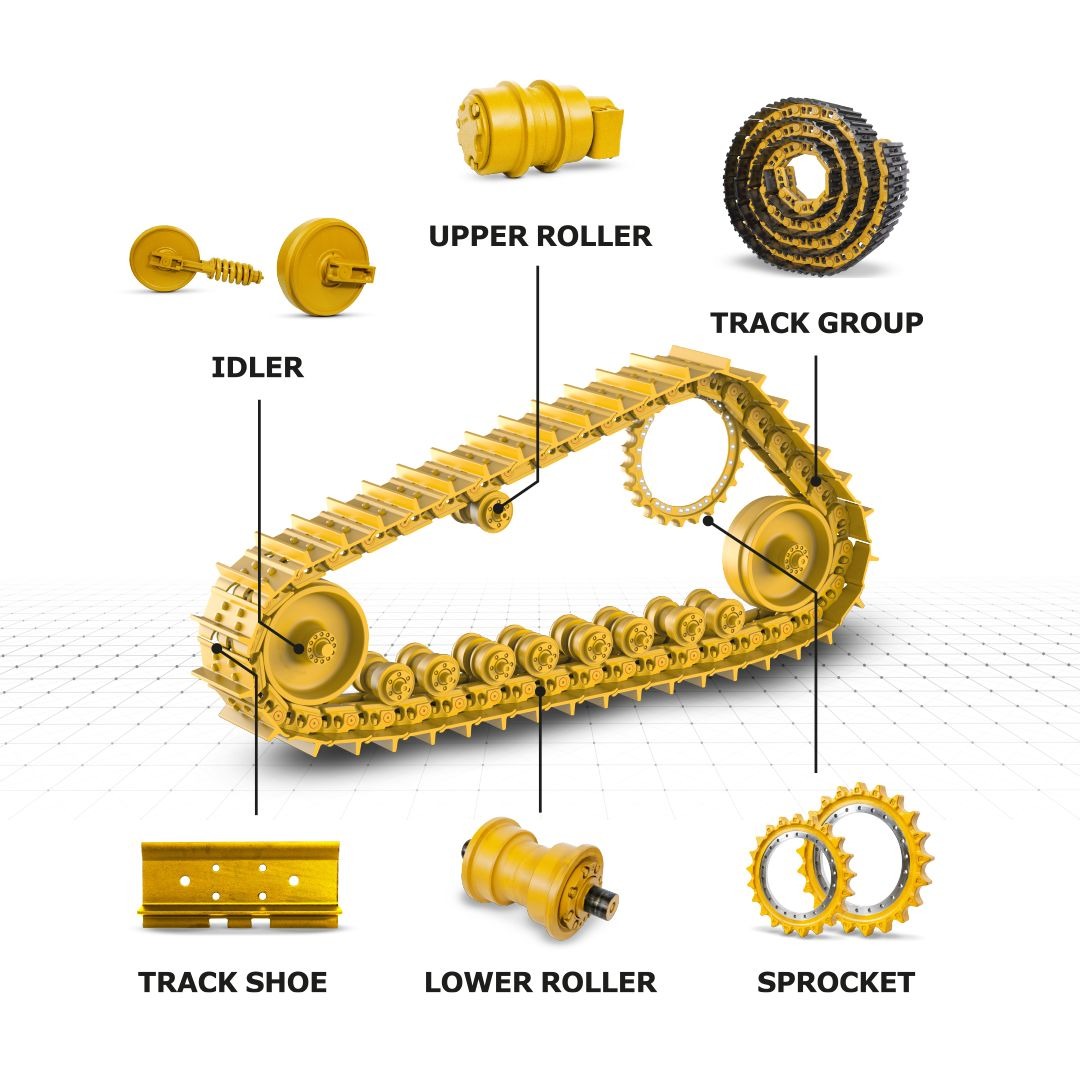
- Track Chain: The metallic “road” on which the machine moves.
- Sprocket (Drive Wheel): Transfers the engine’s power to the chain.
- Idler: Guides the chain and maintains correct tension.
- Rollers (Bottom and Carrier Rollers): Support the machine’s weight and allow for smooth travel.
The Essential Habit: Monitoring Track Tension
A track that is too tight accelerates wear on pins and bushings; one that is too loose risks “de-tracking”, halting operations. Here is how to perform a quick check:
- Cleanup: Remove mud or stones from the top of the track.
- Positioning: Park on level ground.
- Measuring the Sag: Find the highest point between the idler and the first carrier roller. You should see a slight curve (the “track sag”).
- Warning Sign: A track that is perfectly straight, like a guitar string, is a symptom of excessive tension—the leading cause of premature sprocket wear.
How to Read Sprockets: The “Shark Fin” Signal
The sprocket is the thermometer of your undercarriage’s health. While a new tooth is thick and blunt, a worn tooth becomes thin and develops a distinctive hooked point.
Warning: When teeth become “shark fins,” they begin to act like small chisels, grinding down the chain bushings with every rotation.
Expert Tip: Sprockets and track chains should ideally be replaced together. Fitting a new chain onto old sprockets cuts its service life in half in a very short time.
Conclusion: Proactive Maintenance Pays Off
Moving from “reactive” maintenance (repairing when it breaks) to “proactive” maintenance (monitoring and planning) is the only way to effectively manage your site budget. A few minutes a day can save months of operational uptime.
Does your undercarriage show signs of “shark finning” or oil leaks from the rollers? Don’t wait for a breakdown.
