


Steel track shoes are among the most stressed components of the undercarriage. For this reason, they require constant inspections and a specific maintenance.
In this article, we look at the key aspects to monitor to avoid premature wear, reduce costs, and maintain high machine performance.
- Choosing the right track shoe
- Properly adjust track tension
- Daily undercarriage cleaning
- Adopt propter operating techniques
- Track shoe replacement
- Internal component maintenance
Choosing the right track shoe
Choosing the right track shoe is crucial and must be based on the type of operation. The main types are:
- Single-grouser track shoes
Ideal for agriculture and all applications requiring high grip. - Double-grouser track shoes
Recommended for heavy-duty work, such as quarrying activities. - Triple-grouser track shoes
Widely used in the construction sector.
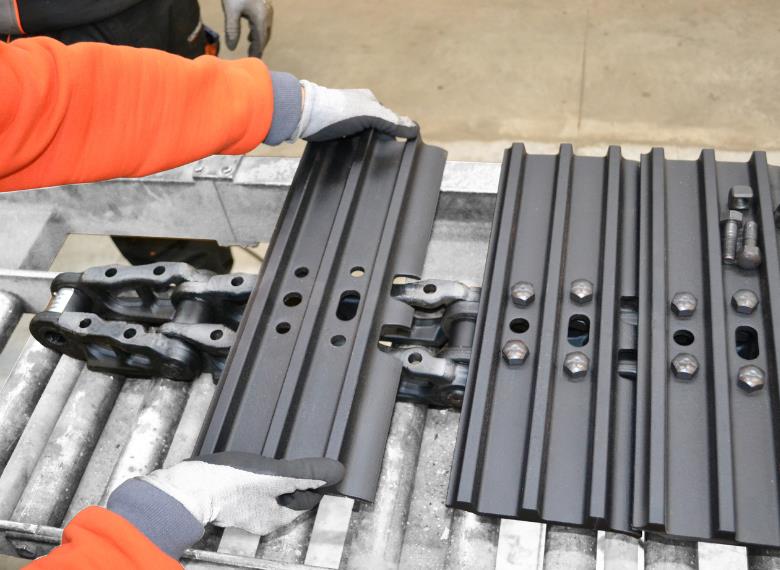
Track shoe grousers influence both traction and flotation.
The highest-performing solutions use heat-treated boron steel, which offers greater abrasion resistance.
2. Properly adjusting track tension
Track tension is one of the most important checks to ensure the durability of the track shoes. The main reference is the sag: the track must hang slightly in the center section.
Incorrect tension can cause:
- Bushing overheating
- Pin wear
- Vibrations
- Loosening of the hardware (bolts)
Adjustment is performed via the track adjuster grease valve.
3. Daily undercarriage cleaning
Daily cleaning is a simple yet critical practice. Dry mud becomes abrasive and accelerates the wear of all components.
Daily checklist:
- Remove mud from around the rollers
- Clear the track shoe drain holes
- Check for stones jammed between the track links
4. Adopt proper operating techniques
Driving style directly impacts the service life of track shoes. Avoid:
- Counter-rotations
- High-speed reversing under load
- Prolonged side-slope operation
During travel, it is good practice to keep the drive sprockets at the rear to reduce vibrations and improve alignment.
5. Track shoe replacement or refurbishment
Sometimes immediate action is necessary. This applies to:
- Worn-out grousers
- Thinned or warped plates
- Rust around the bolts
Timely intervention prevents further damage and ensures a longer service life for the entire undercarriage.
6. Internal component maintenance
SALT chains contain oil between the pin and bushing: a system that requires special attention. Signs that should not be ignored are:
- Hot joints
- Squeaking
- Side wear on the track links
Other important checks to include in routine maintenance:
- rollers
- idlers
- Any bent pins
Recommended maintenance schedule
To ensure no component is overlooked, it can be useful to follow a simple schedule:
- Monday: track tension check
- Wednesday: hardware inspection
- Friday: thorough undercarriage cleaning
- Every 250 hours: grouser height measurement
