


Introduction: The Dimensional Challenge
In mini-excavators, the undercarriage often operates in cramped spaces, on demolition debris, or urban curbs. Even though the masses involved are smaller, wear is accelerated by the frequency of movements and the type of terrain. Identifying critical components isn’t just about preventing breakdowns—it’s about strategically planning machine downtime.
1. Wear “Hot Spots” in Mini-excavators
Rubber Tracks vs. Steel Tracks
On mini-excavators, the rubber track is the most exposed component.
The Enemy: Side cuts and the breaking of internal steel cables caused by sharp debris.
- Alert Signal: Fraying edges or the appearance of “bulges” on the surface.
- For Steel: If the machine is equipped with steel tracks, wear shifts to the bushings and track shoes, especially when working on asphalt or concrete.
Lower Rollers: The Most Stressed
Due to their small diameter, mini-excavator rollers perform many more rotations compared to those on a large excavator.
- Criticality: Accumulation of mud and debris destroys the seals, leading to lubricant loss and roller seizing
- Alert Signal: Flattening of the tread surface or visible oil leaks on the sides.
Sprockets
On small machines, there is often a tendency to over-tighten the track. This causes premature wear on the sprocket teeth.
- Alert Signal: Teeth take on a “pointed” or “hooked” shape. A worn sprocket quickly destroys the metal cores of the rubber track.
2. External Causes and Debris Management
Unlike heavy machinery, mini-excavators often operate “buried” in material (soil, rubble).
- The “Grinding” Effect: Debris entering between the track and rollers acts like sandpaper.
- Technical Tip: Daily cleaning of the undercarriage with a pressure washer or a shovel is not about aesthetics—it is mechanical maintenance. Removing stones stuck in the guides prevents de-tracking (the track “slipping” off the guides).
3. How to prevent Premature Wear: A Quick Checklist
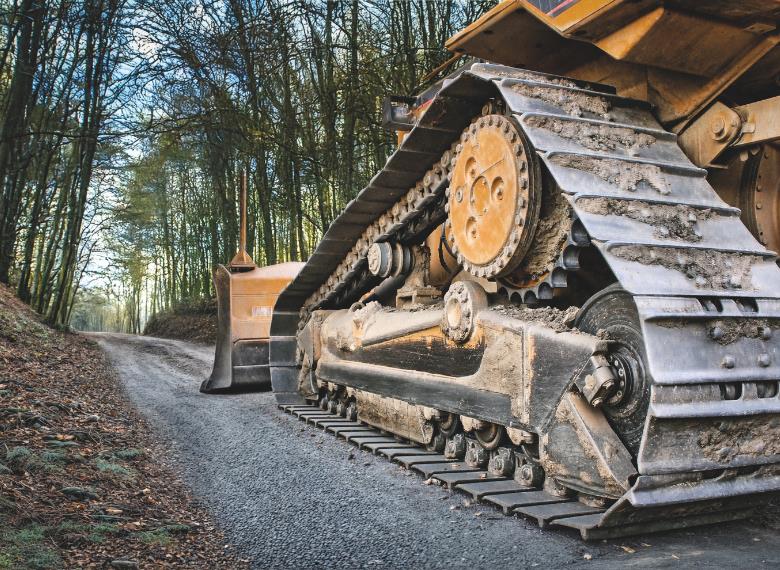
To double the life of your undercarriage, follow these three rules:
- Correct Tension: A track that is too tight wears out bearings and sprockets; a track that is too loose risks de-tracking and damaging the rollers.
- Avoid Counter-rotation: Continuously spinning the machine on the spot doubles the wear on the track sides and rollers.
- Visual Inspection of Upper Rollers: These are often forgotten because they are hidden, but if they stop spinning, the track will “plane” down the support in just a few hours.
4. Conclusion
A mini-excavator undercarriage is an interconnected system: if a roller blocks, it ruins the track; if the track is ruined, it consumes the sprocket. Timely replacement of the weakest component is the secret to avoiding a total undercarriage overhaul.
Contact us for more informations.
