Mini-excavators: Which Undercarriage Components Wear Out First?

Introduction: The Dimensional Challenge

In mini-excavators, the undercarriage often operates in cramped spaces, on demolition debris, or urban curbs. Even though the masses involved are smaller, wear is accelerated by the frequency of movements and the type of terrain. Identifying critical components isn’t just about preventing breakdowns—it’s about strategically planning machine downtime.

1. Wear “Hot Spots” in Mini-excavators

Rubber Tracks vs. Steel Tracks

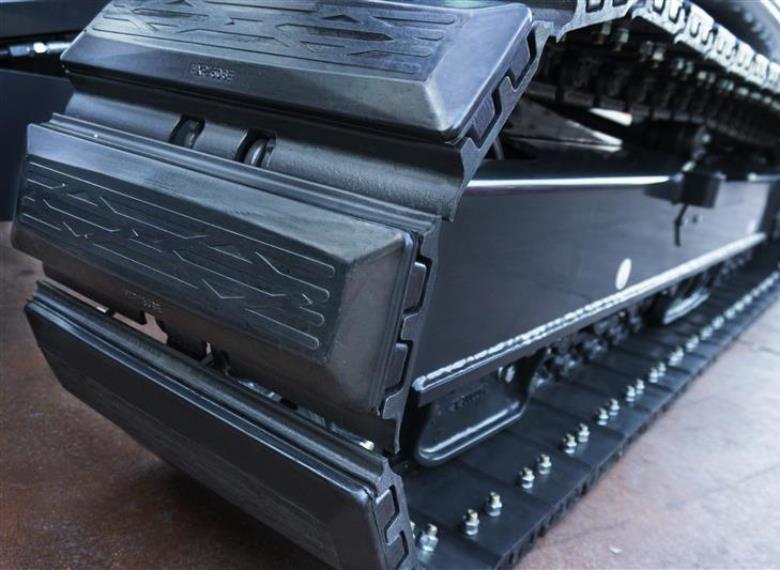
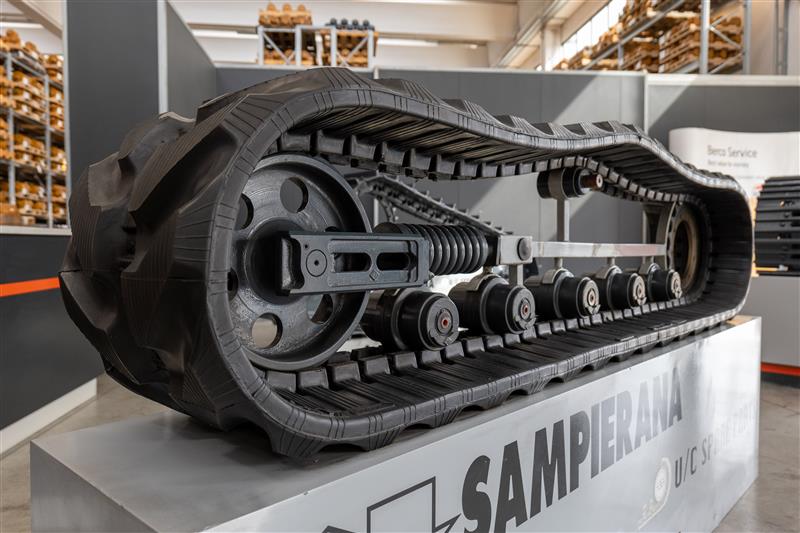
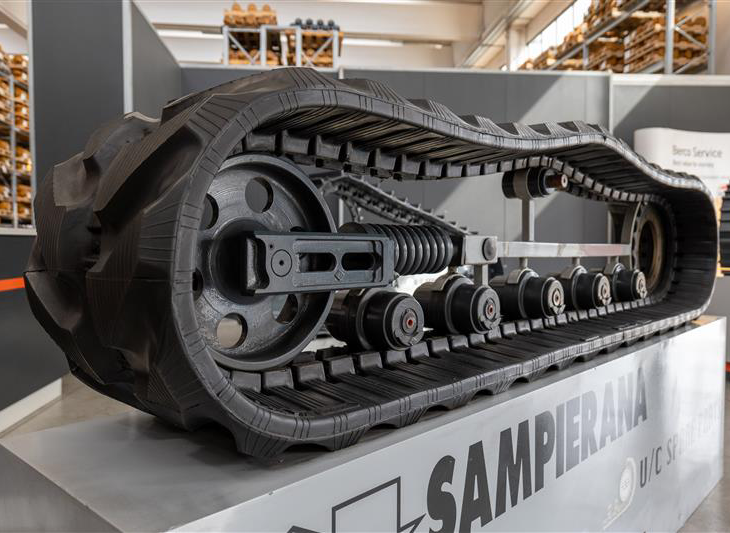
On mini-excavators, the rubber track is the most exposed component.

  • The Enemy: Side cuts and the breaking of internal steel cables caused by sharp debris.

  • Alert Signal: Fraying edges or the appearance of “bulges” on the surface.
  • For Steel: If the machine is equipped with steel tracks, wear shifts to the bushings and track shoes, especially when working on asphalt or concrete.

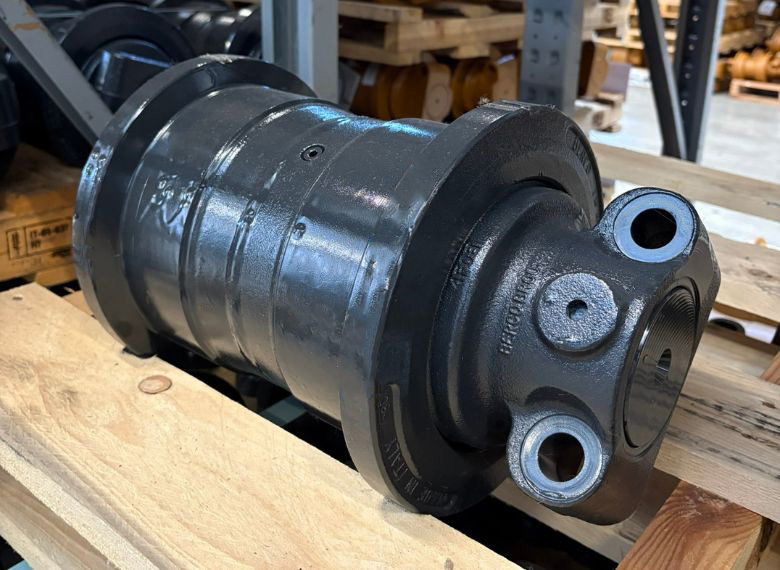
Lower Rollers: The Most Stressed

Due to their small diameter, mini-excavator rollers perform many more rotations compared to those on a large excavator.

  • Criticality: Accumulation of mud and debris destroys the seals, leading to lubricant loss and roller seizing
  • Alert Signal: Flattening of the tread surface or visible oil leaks on the sides.

Sprockets

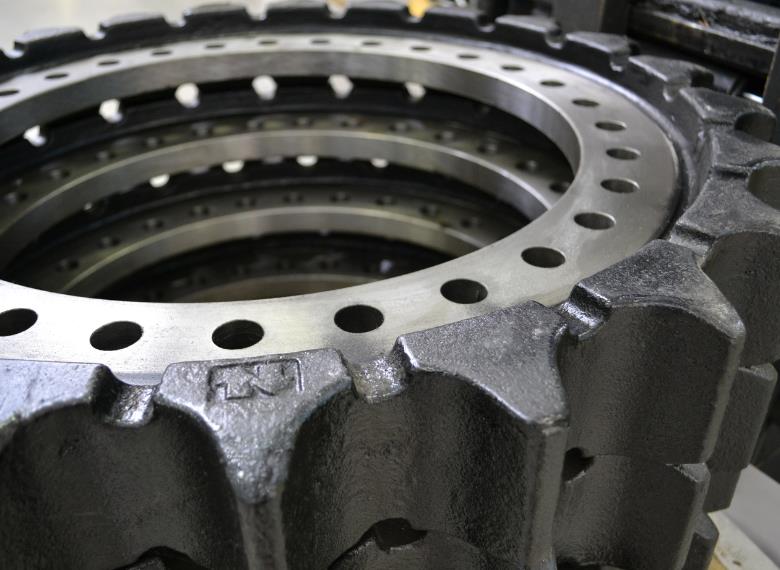
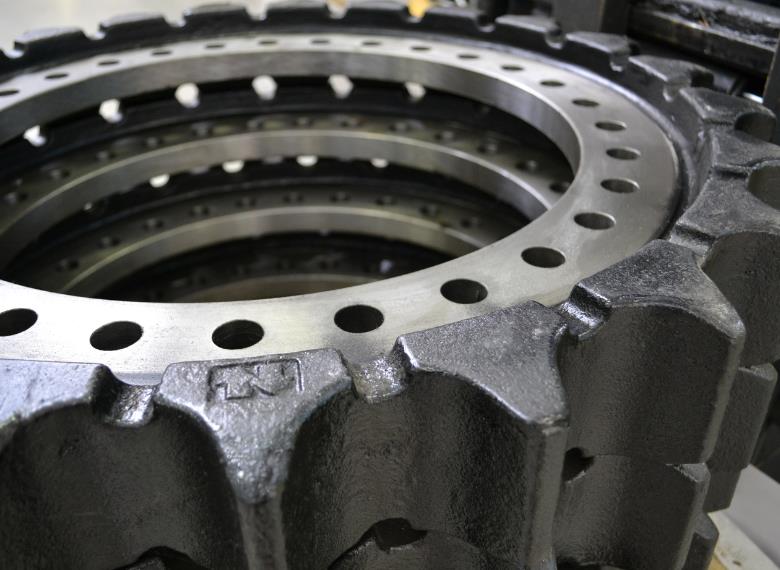
On small machines, there is often a tendency to over-tighten the track. This causes premature wear on the sprocket teeth.

  • Alert Signal: Teeth take on a “pointed” or “hooked” shape. A worn sprocket quickly destroys the metal cores of the rubber track.

2. External Causes and Debris Management

Unlike heavy machinery, mini-excavators often operate “buried” in material (soil, rubble).

  • The “Grinding” Effect: Debris entering between the track and rollers acts like sandpaper.
  • Technical Tip: Daily cleaning of the undercarriage with a pressure washer or a shovel is not about aesthetics—it is mechanical maintenance. Removing stones stuck in the guides prevents de-tracking (the track “slipping” off the guides).

3. How to prevent Premature Wear: A Quick Checklist

Sottocarro UC Spare Parts su sfondo ambientato

To double the life of your undercarriage, follow these three rules:

  1. Correct Tension: A track that is too tight wears out bearings and sprockets; a track that is too loose risks de-tracking and damaging the rollers.
  2. Avoid Counter-rotation: Continuously spinning the machine on the spot doubles the wear on the track sides and rollers.
  3. Visual Inspection of Upper Rollers: These are often forgotten because they are hidden, but if they stop spinning, the track will “plane” down the support in just a few hours.

4. Conclusion

A mini-excavator undercarriage is an interconnected system: if a roller blocks, it ruins the track; if the track is ruined, it consumes the sprocket. Timely replacement of the weakest component is the secret to avoiding a total undercarriage overhaul.

Contact us for more informations.

    Si

    I read the information about my personal data’s use reported in your Privacy Policy

    Si

    I wish to subscribe to the Newsletter and consent to the processing of personal data for this purpose, under the conditions indicated in the Privacy Policy

    Which brand are you interested in?

    MARKETING ACTIVITIES

    The processing of my Data by Sampierana S.p.A in paper form or through automated or electronic means including mail, email and telephone (e.g. automated phone calls, SMS, MMS, Fax) and any other means (e.g. websites, mobile phone apps), for the purpose of sending commercial communications and advertising relating to products and services, as specified in the privacy policy

    Sprockets: Evaluating Steel Quality for the Undercarriage

    Introduction: Why is all steel not created equal

    In sprockets, steel is the only barrier against abrasive wear and extreme shock loads. A low-quality sprocket wears out prematurely, accelerating damage to the track bushings. Evaluating metal quality is not just a technical choice, but a strategy to slash maintenance costs

    1. Crucial Properties: Surface Hardness vs. Core Toughness

    The secret of a high-performance sprocket lies in the balance between two opposing properties:

    Surface Hardness (Wear Resistance)

    Sprocket teeth must be extremely hard to withstand continuous friction against the bushings. The industry standard requires the use of alloy steel subjected to heat treatments to achieve the correct hardening of the tooth’s outer surface.

    Core Toughness (Impact Resistance)

    If the sprocket were hard throughout, it would be as brittle as glass and would shatter under load. High-quality steel must maintain a tougher, more flexible ‘core’ to absorb mechanical shocks without failing.

    2. Technical Evaluation Parameters

    To professionally judge a spare part, you must look beyond the aesthetics:

    Case Hardening Depth

    It is not just about how hard the surface is, but how deep the treatment penetrates. A hardening layer that is too thin will vanish in a few hundred hours, exposing the soft underlying steel and leading to exponential wear.

    Chemical Analysis and Microstructure

    Quality is revealed under the microscope. Correct chemical analysis ensures the absence of impurities (non-metallic inclusions). Improperly alloyed steel can lead to brittleness and potential failure.

    3. Quality Testing in the Workshop and Laboratory

    To ensure a sprocket exceeds OEM standards, three fundamental tests are performed:

    Rockwell Hardness Test (HRC): Measures the resistance of the tooth surface.
    • Charpy Impact Test: Evaluates the material’s ability to absorb energy during a sudden impact.
    • Ultrasonic or Magnetic Particle Inspection: Used to identify internal cracks or defects invisible to the naked eye that could cause structural failure.

    Conclusion: An investment that pays off over time

    Choosing sprockets based solely on the initial price is a common mistake. Lower-quality steel not only requires more frequent replacements but compromises the entire undercarriage geometry, prematurely wearing out chains and rollers.

    Investing in certified steel and controlled heat treatments means ensuring safety, efficiency, and a prolonged service life for your machine.

    Would you like to carry out a thorough assessment of your sprockets? Contact us for technical support

      Si

      I read the information about my personal data’s use reported in your Privacy Policy

      Si

      I wish to subscribe to the Newsletter and consent to the processing of personal data for this purpose, under the conditions indicated in the Privacy Policy

      Which brand are you interested in?

      MARKETING ACTIVITIES

      The processing of my Data by Sampierana S.p.A in paper form or through automated or electronic means including mail, email and telephone (e.g. automated phone calls, SMS, MMS, Fax) and any other means (e.g. websites, mobile phone apps), for the purpose of sending commercial communications and advertising relating to products and services, as specified in the privacy policy

      Chain Pitch: how to measure it correctly

      The “Internal Mileage” of the Track Chain

      Track pitch is the most reliable indicator of your undercarriage’s health. Measuring it correctly isn’t just about checking track tension; it is about assessing the remaining service life of your bushings and pins. Excessive pitch elongation is a clear warning sign that internal component contact is failing, leading to the rapid destruction of your drive sprockets

      1. What is Track Pitch and Why Monitor It?

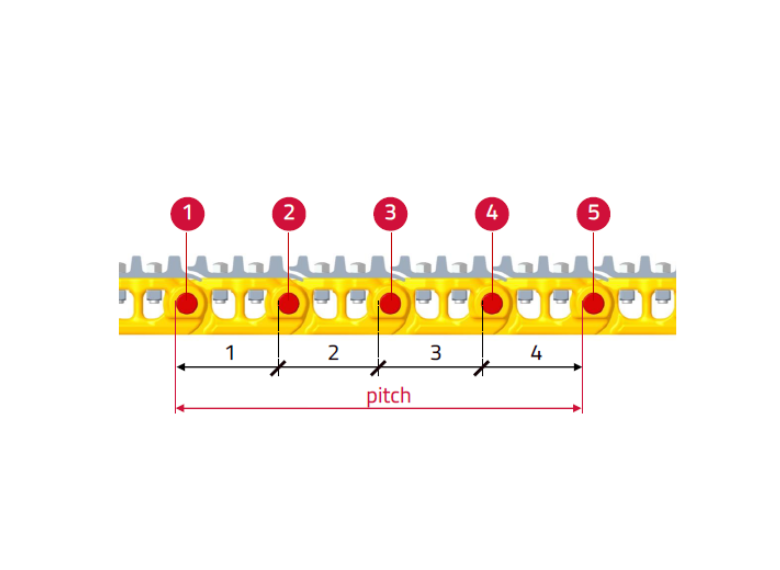
      The pitch is the distance between the centers of two adjacent pins. On a new track, this measurement is fixed and nominal. During operation, friction between the pin and bushing wears down the metal, creating play that effectively “stretches” the track.

      Why it is vital:

      • Synchronization: If the pitch elongates, the sprocket teeth no longer strike the bushing at the correct point, gouging and destroying it.

      2. Tools and Preparation

      Forget standard rulers for professional measurements. A technical report requires:

      • Vernier Caliper (Precision): To measure the distance between pins.
      • Ultrasonic Wear Indicator (Optional): For advanced technicians.
      • Feeler Gauge or Specific Template: Often provided by undercarriage manufacturers.

      Golden Rule: Measurements must be taken with the chain under tension. A slack chain will always yield a false result (lower than actual wear).

      3. Technical Procedure: The 5-Pin Rule

      To minimize error, never measure a single pitch; instead, take the average across multiple sections.

      • 1. Tensioning: move the machine slightly forward and stop without braking abruptly, ensuring the upper section of the track is taut.
      • 2. 5-Pin Measurement: place the caliper between the side of the first pin and the corresponding side of the fourth pin (covering 3 full pitches).
      • 3. Average Calculation: divide the obtained measurement by 3. Compare the result with the manufacturer’s wear charts (e.g., Berco, ITM, Caterpillar).
      • 4. Repetition: Perform the test at least at three different points on the chain to rule out localized wear (e.g., near the master link).

      4. Common Mistakes to Avoid

      • Measuring a Dirty Chain: Even a few millimeters of packed earth between links can skew the result by 2-3%, which is significant in terms of wear.
      • Ignoring OEM Specifications: Every machine model has a different nominal pitch. Do not use generic “standard measurements.”
      • Underestimating Elongation: A pitch elongation of even 3% compared to new can mean the chain has already reached 100\% of its service life.

      5. Interpreting the Results

      • Wear < 25%: Excellent condition
      • Wear 50-70%: Ideal time to evaluate extraordinary maintenance.
      • Wear > 100%: The chain is “out of pitch.” Replacement is urgent to avoid damaging sprockets and rollers.

      Ready to put yourselves to the test? Our technicians are on hand to help – just get in touch.

        Si

        I read the information about my personal data’s use reported in your Privacy Policy

        Si

        I wish to subscribe to the Newsletter and consent to the processing of personal data for this purpose, under the conditions indicated in the Privacy Policy

        Which brand are you interested in?

        MARKETING ACTIVITIES

        The processing of my Data by Sampierana S.p.A in paper form or through automated or electronic means including mail, email and telephone (e.g. automated phone calls, SMS, MMS, Fax) and any other means (e.g. websites, mobile phone apps), for the purpose of sending commercial communications and advertising relating to products and services, as specified in the privacy policy

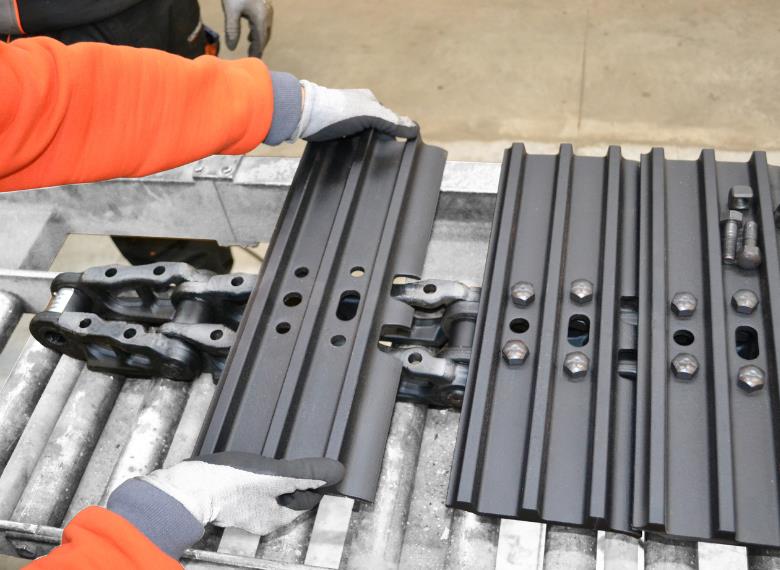
        How to extend the service life of steel track shoes

        Steel track shoes are among the most stressed components of the undercarriage. For this reason, they require constant inspections and a specific maintenance.

        In this article, we look at the key aspects to monitor to avoid premature wear, reduce costs, and maintain high machine performance.

        Choosing the right track shoe

        Choosing the right track shoe is crucial and must be based on the type of operation. The main types are:

        • Single-grouser track shoes
          Ideal for agriculture and all applications requiring high grip.
        • Double-grouser track shoes
          Recommended for heavy-duty work, such as quarrying activities.
        • Triple-grouser track shoes
          Widely used in the construction sector.

        Track shoe grousers influence both traction and flotation.
        The highest-performing solutions use heat-treated boron steel, which offers greater abrasion resistance.

        2. Properly adjusting track tension

        Track tension is one of the most important checks to ensure the durability of the track shoes. The main reference is the sag: the track must hang slightly in the center section.

        Incorrect tension can cause:

        • Bushing overheating
        • Pin wear
        • Vibrations
        • Loosening of the hardware (bolts)

        Adjustment is performed via the track adjuster grease valve.

        3. Daily undercarriage cleaning

        Daily cleaning is a simple yet critical practice. Dry mud becomes abrasive and accelerates the wear of all components.

        Daily checklist:

        • Remove mud from around the rollers
        • Clear the track shoe drain holes
        • Check for stones jammed between the track links

        4. Adopt proper operating techniques

        Driving style directly impacts the service life of track shoes. Avoid:

        • Counter-rotations
        • High-speed reversing under load
        • Prolonged side-slope operation

        During travel, it is good practice to keep the drive sprockets at the rear to reduce vibrations and improve alignment.

        5. Track shoe replacement or refurbishment

        Sometimes immediate action is necessary. This applies to:

        • Worn-out grousers
        • Thinned or warped plates
        • Rust around the bolts

        Timely intervention prevents further damage and ensures a longer service life for the entire undercarriage.

        6. Internal component maintenance

        SALT chains contain oil between the pin and bushing: a system that requires special attention. Signs that should not be ignored are:

        • Hot joints
        • Squeaking
        • Side wear on the track links

        Other important checks to include in routine maintenance:

        • rollers
        • idlers
        • Any bent pins

        Recommended maintenance schedule

        To ensure no component is overlooked, it can be useful to follow a simple schedule:

        • Monday: track tension check
        • Wednesday: hardware inspection
        • Friday: thorough undercarriage cleaning
        • Every 250 hours: grouser height measurement

        5 Key Signs It’s Time to Replace Your Undercarriage Rollers

        Undercarriage rollers are essential components for the proper operation of mini-excavators and excavators. Ignoring signs of wear can lead to costly downtime and expensive repairs. Here are five key signs that indicate it is time to replace your undercarriage rollers.

        Table of contents

        Here are five key signs that indicate it is time to replace your undercarriage rollers.

        1. Unusual Noises During Operation

        If you notice strange sounds, such as squeaking or grinding, coming from the undercarriage, it could be an indication that the rollers are worn out.

        These sounds often signal that the rollers are no longer rotating smoothly.

        2. Uneven Wear on the Rollers

        Regularly inspect the rollers for signs of irregular wear.

        Undercarriage rollers for mini-excavators and excavators, such as those from Berco, should have a uniform surface. If you notice uneven wear patterns, it is likely that they need to be replaced.

        3. Excessive Vibrations

        Excessive vibrations during use can be another sign that the undercarriage rollers are damaged. These vibrations can negatively impact operator comfort and the precision of the work being performed.

        4. Difficulty in Movement

        If the excavator or mini-excavator struggles to move, or if you notice resistance during travel, the rollers could be the cause. An undercarriage in good condition should allow for smooth, effortless movement.

        5. Visible Damage

        Finally, visually inspect the rollers for any physical damage. Cracks, chipping, or deformations are clear signs that the rollers must be replaced. Ignoring this damage can lead to further mechanical failures.

        Maintaining undercarriage rollers in good condition is fundamental to ensuring the operational efficiency of your machinery

        Expert Tip:If you notice one or more of these signs, consider replacing the rollers on your excavator or mini-excavator. Investing in high-quality components, such as Berco undercarriage rollers, can extend the life of your equipment and reduce long-term maintenance costs.

        Sottocarro UC Spare Parts su sfondo ambientato

        Undercarriage Guide: How to Spot Early Wear Patterns and Save on Replacement Parts

        The Undercarriage Failure

        Undercarriage failure is one of the most dreaded unforeseen expenses on a job site. According to key OEM data, the track system can represent up to 50% of the total maintenance costs of an earthmoving machine.

        Unlike the engine, which operates protected within its compartments, the undercarriage is a “planned wear” system that battles the abrasion of mud, rock, and debris every second. Fortunately, it is possible to intervene promptly starting with a conscious visual inspection.

        Why Undercarriage Wear is a “Domino Effect”

        Component wear follows a chain reaction. If a single bottom roller seizes, the chain begins to slide instead of rolling, creating a flat spot on the roller and prematurely wearing down the track links.

        Identifying the first worn component early means breaking this vicious cycle before it turns into a major expense due to machine downtime.

        The “Big Four” of the Undercarriage: Know Your Components

        Before inspecting, we must understand the key players:

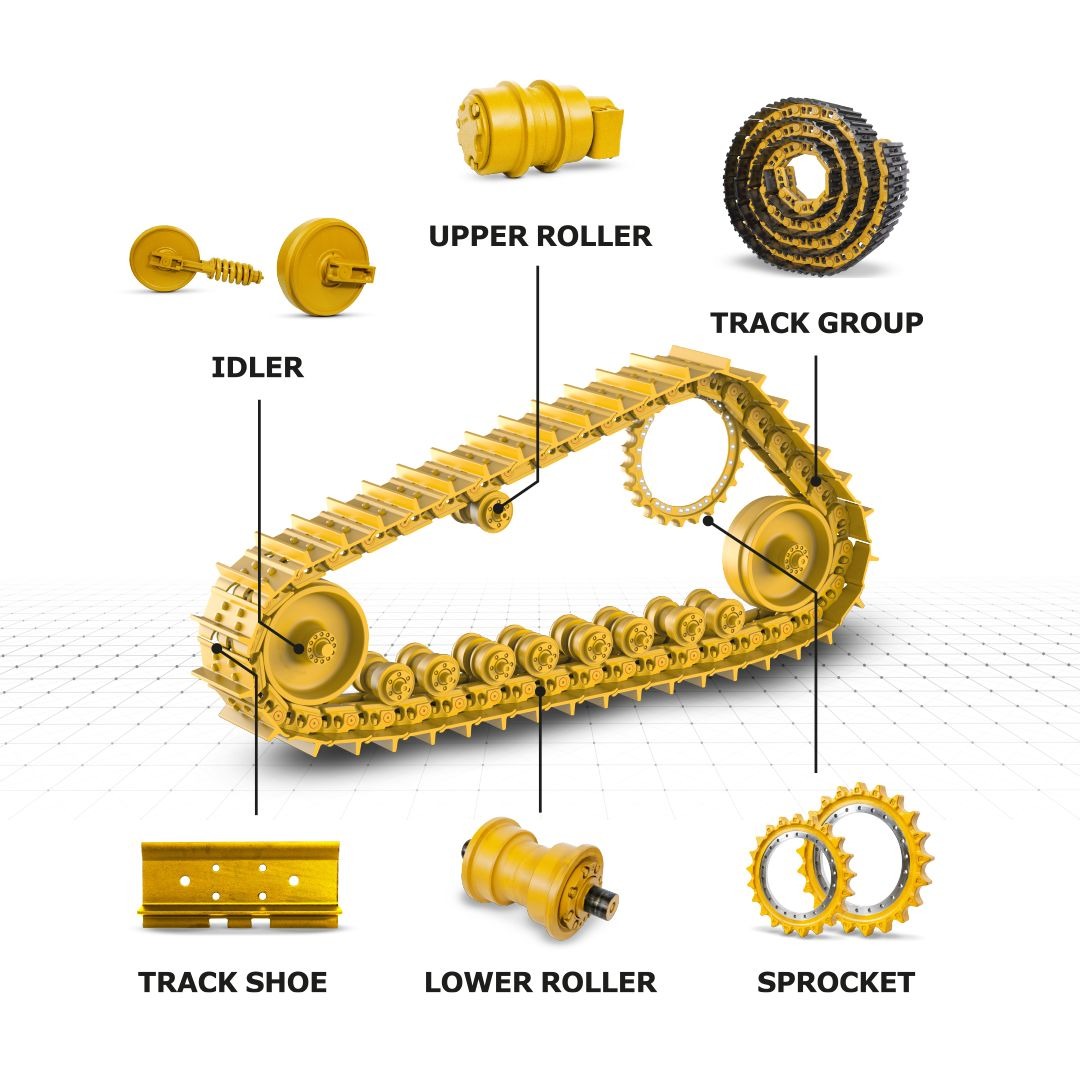
        1. Track Chain: The metallic “road” on which the machine moves.
        2. Sprocket (Drive Wheel): Transfers the engine’s power to the chain.
        3. Idler: Guides the chain and maintains correct tension.
        4. Rollers (Bottom and Carrier Rollers): Support the machine’s weight and allow for smooth travel.

        The Essential Habit: Monitoring Track Tension

        A track that is too tight accelerates wear on pins and bushings; one that is too loose risks “de-tracking”, halting operations. Here is how to perform a quick check:

        • Cleanup: Remove mud or stones from the top of the track.
        • Positioning: Park on level ground.
        • Measuring the Sag: Find the highest point between the idler and the first carrier roller. You should see a slight curve (the “track sag”).
        • Warning Sign: A track that is perfectly straight, like a guitar string, is a symptom of excessive tension—the leading cause of premature sprocket wear.

        How to Read Sprockets: The “Shark Fin” Signal

        The sprocket is the thermometer of your undercarriage’s health. While a new tooth is thick and blunt, a worn tooth becomes thin and develops a distinctive hooked point.

        Warning: When teeth become “shark fins,” they begin to act like small chisels, grinding down the chain bushings with every rotation.

        Expert Tip: Sprockets and track chains should ideally be replaced together. Fitting a new chain onto old sprockets cuts its service life in half in a very short time.

        Conclusion: Proactive Maintenance Pays Off

        Moving from “reactive” maintenance (repairing when it breaks) to “proactive” maintenance (monitoring and planning) is the only way to effectively manage your site budget. A few minutes a day can save months of operational uptime.

        Does your undercarriage show signs of “shark finning” or oil leaks from the rollers? Don’t wait for a breakdown.

        Track Adjuster Assembly: Essential Undercarriage Component

        Every operator knows that the secret to a productive earthmoving machine lies in the reliability of its undercarriage. While the track chain and rollers attract attention, there is an essential component that works tirelessly to protect them from wear and damage: the Idler Group, which houses the Idler Wheel.

        Ecco la traduzione del primo blocco: “Every operator knows that the secret to a productive earthmoving machine lies in the reliability of its undercarriage. While the track chain and rollers attract attention, there is an essential component that works tirelessly to protect them from wear and damage: the Track Adjuster Assembly (or Idler Group), which houses the Idler Wheel. The Track Adjuster Assembly is not a luxury, but a fundamental safety mechanism. Its function is twofold and vital: to guide the track to prevent derailment and to absorb shocks to protect the chassis from overloads. Without an efficient tensioning system, the entire service life of your track will be drastically reduced.

        The Three Executive Roles of the Tensioning System

        When we talk about the Track Adjuster Assembly, we are talking about an orchestra of components that work together. The effectiveness of a Berco system lies in the synergy of its key elements

        1. Guidance and Alignment (The Idler Wheel): The idler wheel directs the track chain, ensuring its correct alignment. An optimized profile reduces friction and dirt accumulation, ensuring smooth rotation
        2. Impact Protection (The Spring Assembly): A preloaded spring acts as the true shock absorber for the tracked machine. When the idler wheel encounters a rock or an obstacle, it is the spring that compresses, absorbing the shock and preventing the destructive force from spreading inside the frame and to the other undercarriage components.
        3. Tension Adjustment (The Hydraulic Adjuster Assembly): Using a grease cylinder, the operator can adjust the track tension. By injecting grease, the system pushes the idler wheel forward; by releasing grease, the tension is reduced. This allows the correct degree of tension to be maintained, which is crucial for preventing abnormal stretch and premature wear of pins and bushings.
        Sottocarro

        Why Berco Quality is Non-Negotiable

        The constant pressure and exposure to mud, water, and dust make the Track Adjuster Assembly extremely vulnerable. A low-quality component fails first at the sealing system (seals), allowing contaminants to destroy the bearings and rendering the hydraulic adjustment ineffective.

        This is why choosing Berco quality is an essential investment. Their components are designed with:

        • Superior Sealing Systems: They protect the internal mechanism hermetically, even in the most aggressive environments.
        • Advanced Metallurgy: Heat-treated steel ensures that both the idler body and the adjuster rod maintain structural integrity under extreme loads and abrasion.

        Choose the Safety of the Complete System with Sampierana

        Don’t just replace a part—invest in a complete protection system. Sampierana UC Spare Parts, in partnership with Berco, offers you Track Adjuster Assemblies that are synonymous with operational longevity and maximum safety.

        We guarantee access to a complete and technically advanced supply, ensuring that the invisible shock absorber of your undercarriage always performs perfectly.

        Undercarriage Sprockets: The Pulsating Heart of Traction

        At the core of every job site, amidst the sound of engines and the dust being kicked up, there is an element working tirelessly beneath the machine, often forgotten but fundamental to every single movement. It’s not the boom, it’s not the cab. It’s the undercarriage, and within it, the sprocket is the true star.

        This is not a simple gear. It’s the point of contact between the engine’s force and the ground, the crucial link that transforms power into traction, allowing your machine to tackle climbs, rough terrain, and heavy loads. Without a reliable sprocket, the machine stops.

        The Key Role and Technical Characteristics

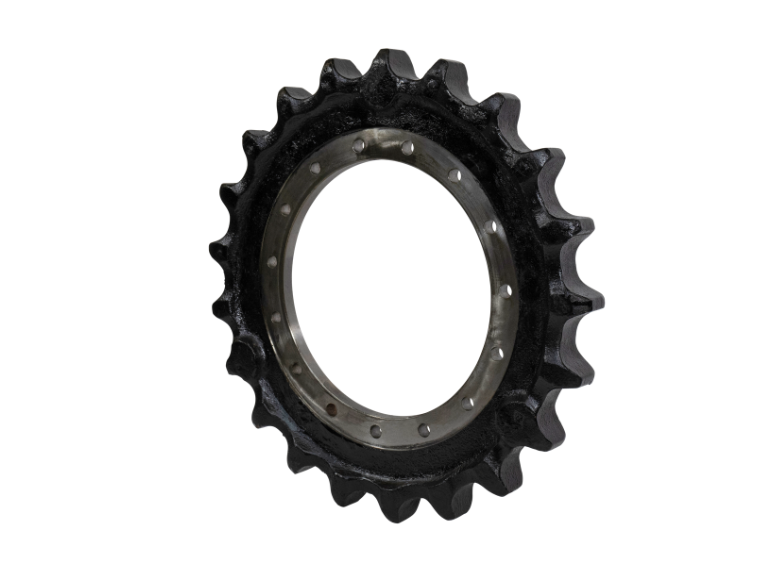
        The sprocket, generally located at the rear of the undercarriage, is a critical element of the track system. Unlike idler wheels, which guide the track at the front, the sprocket is the only part that engages with the track to move it forward. To withstand the enormous torsional stresses and constant wear, it requires the highest quality materials and special treatments.

        High-quality sprockets are produced using either casting or forging processes, depending on the specific application, and are heat-treated to ensure superior surface hardness across the entire tooth profile. This induction hardening treatment significantly increases wear resistance, extending the component’s useful life and preventing premature failure.

        A Range Adaptable to Every Need

        Our partner, Berco, is a specialized and leading manufacturer in the industry, with an offering that meets the needs of machines ranging from 1 to 330 tons. The company’s experience has led to the development of specific solutions for different applications:

        • Sprockets for Bulldozers: Often featuring a bolt-on segment design, they allow for quicker and easier maintenance, as there is no need to remove the entire track for replacement.
        • Sprockets for Mining Excavators: Designed with an odd number of teeth, they offer greater resistance to vertical loads and a special profile that facilitates mud discharge, preventing buildup and ensuring optimal performance even in extreme conditions.

        Whether the machine is intended for heavy-duty work on a construction site or in a quarry, or if it operates on difficult terrain, the right sprocket is essential to prevent costly downtime and ensure that work proceeds smoothly.

        Sprockets are available in both the Berco and Sampierana lines.

        Choosing Quality: The Partnership with Berco

        The choice of a quality replacement part is not only a matter of durability but also of safety and operational efficiency. This is where the importance of relying on a partner like Sampierana UC Spare Parts becomes clear. Thanks to our long and consolidated partnership with Berco, we are able to provide you with components that meet all the quality standards described above. We offer the necessary support and expertise to help you choose the perfect sprocket for your machines.

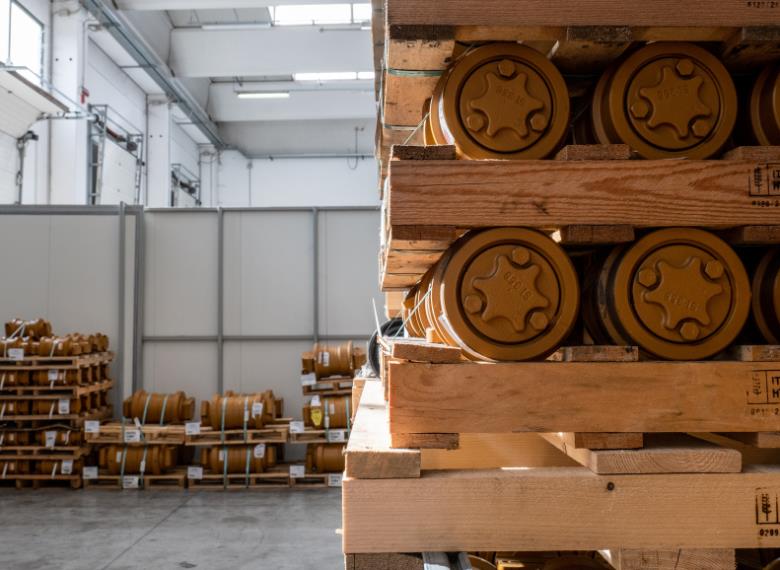
        Track Rollers: The Guardians of Smooth Movement for Your Tracked Machine

        In the complex undercarriage system of an earthmoving machine, every component plays an irreplaceable role. If track chains are the beating heart and track shoes are the “feet” that ensure traction, track rollers are the true guardians of smooth movement. They allow the entire structure to glide and work efficiently, distributing loads and guiding the track system.

        At Sampierana UC Spare Parts, we know that the reliability of these components is fundamental to the productivity of your construction site or agricultural business.

        The Crucial Role of Track Rollers

        Track rollers perform two primary functions, both vital for the correct operation and longevity of your tracked machine:

        1. Weight Support: Lower rollers bear the entire weight of the machine, distributing it evenly along the track group. This prevents excessive wear on the track links and other components, ensuring stability.
        2. Track Guidance and Containment: Both the lower and upper rollers guide the track chain or bulldozer track, keeping it within the correct path. This prevents the track from derailing and ensures smooth, precise movement.

        Without efficient rollers, weight wouldn’t be distributed correctly, leading to abnormal friction and premature wear, resulting in high costs and unwanted machine downtime.

        Two Types of Rollers, One Goal: Efficiency

        There are mainly two types of rollers in the undercarriage, each with a specific function:

        • Lower Rollers: these are the majority of the rollers and directly support the machine’s weight. They must be extremely resistant to wear and impact, as they constantly operate under load in often difficult environments. Their integrity is synonymous with stability and load distribution.
        • Upper Rollers: positioned on the upper part of the undercarriage frame, these rollers are tasked with supporting the slack portion of the chain as it returns to the drive sprocket. This prevents excessive sagging of the chain, reducing vibrations and abnormal wear, and helps maintain correct tension.
        Rullo Sampierana

        Track Rollers: Specific Solutions for Every Operational Need

        The operational context of an earthmoving machine significantly influences the selection and design of rollers. Whether it’s an excavator or a bulldozer, the demands of a construction site are different from those of a mine. At Sampierana UC Spare Parts, we know that not all rollers are created equal, and specialization is crucial for efficiency.

        Rollers for Construction Applications

        Applications in the “Construction” sector (building, urban development, infrastructure) demand versatile and robust rollers, capable of handling mixed terrains, varied work cycles, and frequent maneuvering.

        • For Construction Excavators: These rollers are designed for good abrasion and impact resistance, suitable for excavation, earthmoving, and work on sites that may feature uneven or abrasive surfaces. The balance between durability and agility is key.
        • For Construction Bulldozers: Rollers for bulldozers in the construction sector must withstand high loads and intense traction forces, typical of leveling and moving large volumes of earth. Their robustness ensures stability and continuous support even under heavy pressure.

        Rollers for Mining Applications

        The mining environment is one of the most extreme for undercarriage components. Machines often operate for long shifts on highly abrasive or rocky terrains and are subjected to exceptional loads. Track rollers for the mining sector are engineered for maximum resistance to wear and the most severe impacts.

        • For Mining Excavators: Designed to withstand extreme forces and continuous abrasion from rocks and minerals. They are built with advanced materials and heat treatments to ensure extended service life even in the most prohibitive conditions.
        • For Mining Bulldozers: They must be extremely robust to withstand the weight of colossal machines and the pushing force on hard, rocky materials. Their durability is crucial for minimizing machine downtime in contexts where every hour of inactivity incurs an extremely high cost.

        The differentiation in the design and production of these **undercarriage parts** is a critical factor for optimizing performance and reducing long-term operating costs.

        Rulli Sottocarro Berco e Sampierana

        Roller Quality: An Investment That Pays Off

        Choosing high-quality track rollers isn’t an expense, but a true investment. Low-quality track rollers can, infact, lead to:

        • Accelerated wear: Requiring more frequent replacements and increasing maintenance costs.
        • Increased friction: This translates to higher fuel consumption and reduced operational efficiency.
        • Damage to other components: A faulty roller can compromise the entire track group and even the undercarriage frame.

        At Sampierana UC Spare Parts, we select only undercarriage parts that guarantee long life and consistent performance, even in the most demanding conditions. Our attention to detail and in-depth knowledge of materials allow us to offer track rollers that meet the most stringent technical specifications, reducing your machine downtime and optimizing your operations.


        Sampierana UC Spare Parts: Your Support for Undercarriage Parts

        We’re aware of the daily challenges our customers face. That’s why, at Sampierana UC Spare Parts, we leverage our experience to provide you with track rollers, track group, and other undercarriage parts that meet high standards of quality and reliability. Our deep industry knowledge, gained through years of collaboration with earthmoving professionals, allows us to select products that guarantee excellent and long-lasting performance.

        Whether it’s an excavator, a bulldozer, or another tracked machine, choosing the right undercarriage part means investing in the continuity and efficiency of your work. We’re here to share our expertise and help you find the most suitable solution for your needs, with the same dedication and professionalism that defines us.

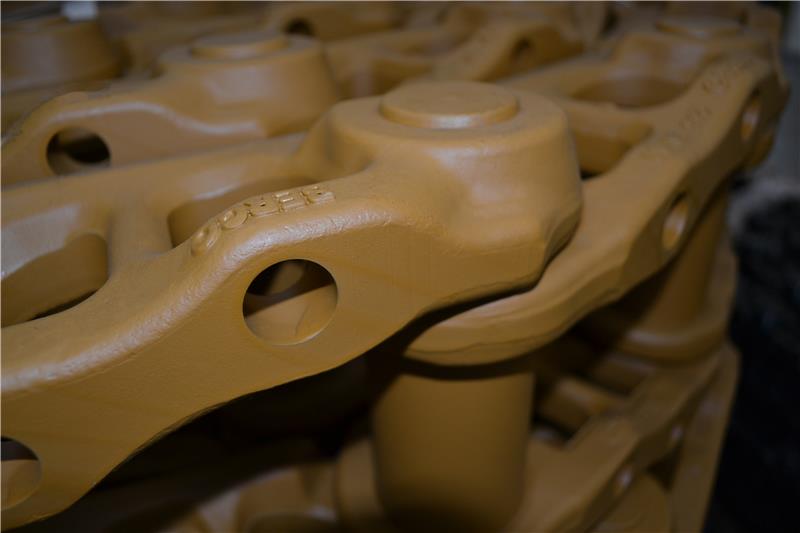
        Track links assembly: the Resistant Heart of Your Tracked Vehicle’s Undercarriage

        In the world of earthmoving machinery, efficiency and reliability are fundamental pillars. Every undercarriage component plays a crucial role, and among them, track links assembly represent the beating heart, ensuring movement, traction, and stability. Relying on robust and high-performing undercarriage spare parts is essential for those operating in the undercarriage spare parts sector.

        Why are Track Links Assembly Indispensable?

        They are designed to withstand high loads and operate in often hostile environments, such as construction sites, quarries, or agricultural terrains. Their complex structure, composed of links, pins, bushings, and rollers, works in perfect synchrony to:

        • Ensure traction: They allow the vehicle to move on different surfaces, even the most challenging ones, distributing weight and ensuring optimal grip.
        • Support the machine’s weight: They support the entire structure of the vehicle, absorbing stresses during work.
        • Ensure stability: They help maintain the balance of the excavator or bulldozer, which is fundamental for precise and safe operations.

        Key Components and Their Importance

        Track Group are a complex system, but understanding how their main components work together will help you recognize the value of a quality spare part. Each element has a specific and fundamental role in the efficiency and durability of your vehicle’s undercarriage.

        • Links (Pads): These are the elements that come into direct contact with the ground and provide traction. Their geometry and material are designed to maximize grip and wear resistance.
        • Pins and Bushings: These elements form the “backbone” of the chain, connecting the links to each other. They must resist constant shear and friction forces. Their coupling precision is fundamental for the durability of the entire track chain.
        • Rollers: They support the machine’s weight and guide the chain, allowing smooth sliding along the undercarriage frame.

        The Importance of Quality and Maintenance

        A superior quality track group translates into:

        • Longer operational life: Fewer machine downtimes and more useful life of the undercarriage.
        • Lower management costs: Reduction of expenses for frequent replacements and extraordinary maintenance interventions.
        • Maximum efficiency and productivity: The vehicle operates at its best capacity, without slowdowns due to undercarriage problems.

        Understanding the interaction between these components is fundamental to appreciating why the choice of quality undercarriage spare parts, such as our excavator chains, is an investment that pays off in terms of performance and operational durability.

        Sampierana UC Spare Parts: Your Support for Undercarriage Spare Parts

        Sampierana UC Spare Parts offers track group under the Sampierana and Berco brands. In both cases, we work to provide the highest quality materials. Our experience in the sector, gained over years of collaboration with earthmoving professionals, allows us to select products that guarantee lasting and valuable performance.

        Whether it’s an excavator, a bulldozer, or another tracked machine, choosing the right undercarriage spare part means investing in the continuity and efficiency of your work. We are here to support you, with the professionalism and attention that distinguish us, helping you find the most suitable solution for your needs