Mini-excavators: Which Undercarriage Components Wear Out First?

Introduction: The Dimensional Challenge

In mini-excavators, the undercarriage often operates in cramped spaces, on demolition debris, or urban curbs. Even though the masses involved are smaller, wear is accelerated by the frequency of movements and the type of terrain. Identifying critical components isn’t just about preventing breakdowns—it’s about strategically planning machine downtime.

1. Wear “Hot Spots” in Mini-excavators

Rubber Tracks vs. Steel Tracks

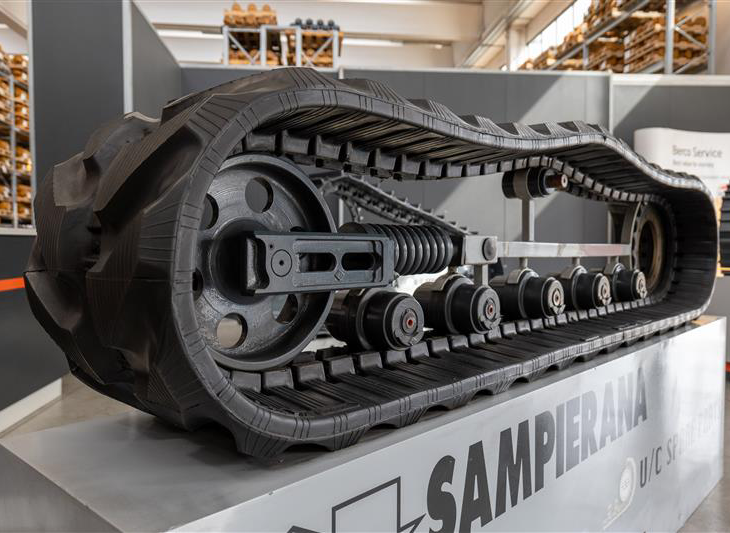
On mini-excavators, the rubber track is the most exposed component.

  • The Enemy: Side cuts and the breaking of internal steel cables caused by sharp debris.

  • Alert Signal: Fraying edges or the appearance of “bulges” on the surface.
  • For Steel: If the machine is equipped with steel tracks, wear shifts to the bushings and track shoes, especially when working on asphalt or concrete.

Lower Rollers: The Most Stressed

Due to their small diameter, mini-excavator rollers perform many more rotations compared to those on a large excavator.

  • Criticality: Accumulation of mud and debris destroys the seals, leading to lubricant loss and roller seizing
  • Alert Signal: Flattening of the tread surface or visible oil leaks on the sides.

Sprockets

On small machines, there is often a tendency to over-tighten the track. This causes premature wear on the sprocket teeth.

  • Alert Signal: Teeth take on a “pointed” or “hooked” shape. A worn sprocket quickly destroys the metal cores of the rubber track.

2. External Causes and Debris Management

Unlike heavy machinery, mini-excavators often operate “buried” in material (soil, rubble).

  • The “Grinding” Effect: Debris entering between the track and rollers acts like sandpaper.
  • Technical Tip: Daily cleaning of the undercarriage with a pressure washer or a shovel is not about aesthetics—it is mechanical maintenance. Removing stones stuck in the guides prevents de-tracking (the track “slipping” off the guides).

3. How to prevent Premature Wear: A Quick Checklist
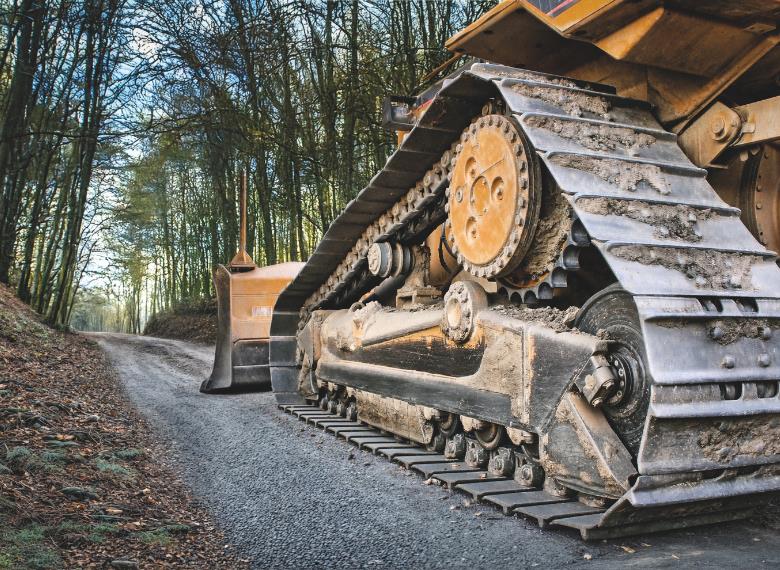
Sottocarro UC Spare Parts su sfondo ambientato

To double the life of your undercarriage, follow these three rules:

  1. Correct Tension: A track that is too tight wears out bearings and sprockets; a track that is too loose risks de-tracking and damaging the rollers.
  2. Avoid Counter-rotation: Continuously spinning the machine on the spot doubles the wear on the track sides and rollers.
  3. Visual Inspection of Upper Rollers: These are often forgotten because they are hidden, but if they stop spinning, the track will “plane” down the support in just a few hours.

4. Conclusion

A mini-excavator undercarriage is an interconnected system: if a roller blocks, it ruins the track; if the track is ruined, it consumes the sprocket. Timely replacement of the weakest component is the secret to avoiding a total undercarriage overhaul.

Contact us for more informations.
    Si

    I read the information about my personal data’s use reported in your Privacy Policy

    Si

    I wish to subscribe to the Newsletter and consent to the processing of personal data for this purpose, under the conditions indicated in the Privacy Policy

    Which brand are you interested in?

    MARKETING ACTIVITIES

    The processing of my Data by Sampierana S.p.A in paper form or through automated or electronic means including mail, email and telephone (e.g. automated phone calls, SMS, MMS, Fax) and any other means (e.g. websites, mobile phone apps), for the purpose of sending commercial communications and advertising relating to products and services, as specified in the privacy policy

    How to extend the service life of steel track shoes

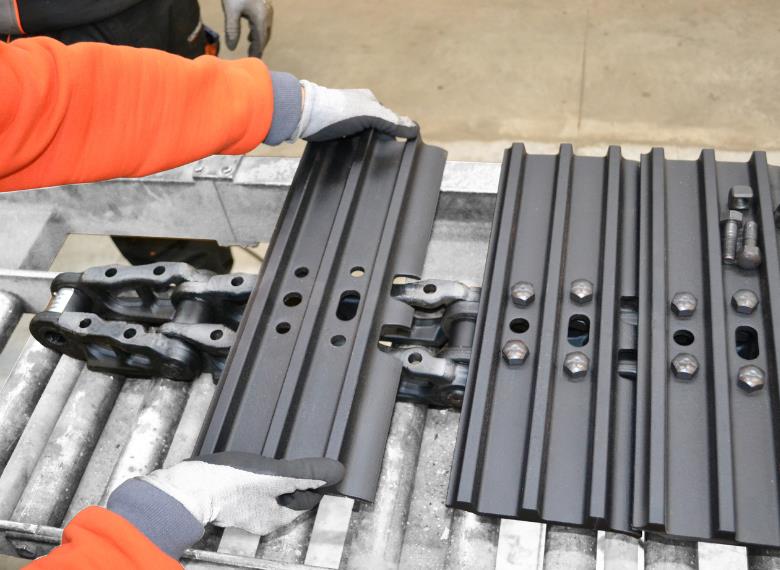
    Steel track shoes are among the most stressed components of the undercarriage. For this reason, they require constant inspections and a specific maintenance.

    In this article, we look at the key aspects to monitor to avoid premature wear, reduce costs, and maintain high machine performance.

    Choosing the right track shoe

    Choosing the right track shoe is crucial and must be based on the type of operation. The main types are:

    • Single-grouser track shoes
      Ideal for agriculture and all applications requiring high grip.
    • Double-grouser track shoes
      Recommended for heavy-duty work, such as quarrying activities.
    • Triple-grouser track shoes
      Widely used in the construction sector.

    Track shoe grousers influence both traction and flotation.
    The highest-performing solutions use heat-treated boron steel, which offers greater abrasion resistance.

    2. Properly adjusting track tension

    Track tension is one of the most important checks to ensure the durability of the track shoes. The main reference is the sag: the track must hang slightly in the center section.

    Incorrect tension can cause:

    • Bushing overheating
    • Pin wear
    • Vibrations
    • Loosening of the hardware (bolts)

    Adjustment is performed via the track adjuster grease valve.

    3. Daily undercarriage cleaning

    Daily cleaning is a simple yet critical practice. Dry mud becomes abrasive and accelerates the wear of all components.

    Daily checklist:

    • Remove mud from around the rollers
    • Clear the track shoe drain holes
    • Check for stones jammed between the track links

    4. Adopt proper operating techniques

    Driving style directly impacts the service life of track shoes. Avoid:

    • Counter-rotations
    • High-speed reversing under load
    • Prolonged side-slope operation

    During travel, it is good practice to keep the drive sprockets at the rear to reduce vibrations and improve alignment.

    5. Track shoe replacement or refurbishment

    Sometimes immediate action is necessary. This applies to:

    • Worn-out grousers
    • Thinned or warped plates
    • Rust around the bolts

    Timely intervention prevents further damage and ensures a longer service life for the entire undercarriage.

    6. Internal component maintenance

    SALT chains contain oil between the pin and bushing: a system that requires special attention. Signs that should not be ignored are:

    • Hot joints
    • Squeaking
    • Side wear on the track links

    Other important checks to include in routine maintenance:

    • rollers
    • idlers
    • Any bent pins

    Recommended maintenance schedule

    To ensure no component is overlooked, it can be useful to follow a simple schedule:

    • Monday: track tension check
    • Wednesday: hardware inspection
    • Friday: thorough undercarriage cleaning
    • Every 250 hours: grouser height measurement

    Sottocarro UC Spare Parts su sfondo ambientato

    Undercarriage Guide: How to Spot Early Wear Patterns and Save on Replacement Parts

    The Undercarriage Failure

    Undercarriage failure is one of the most dreaded unforeseen expenses on a job site. According to key OEM data, the track system can represent up to 50% of the total maintenance costs of an earthmoving machine.

    Unlike the engine, which operates protected within its compartments, the undercarriage is a “planned wear” system that battles the abrasion of mud, rock, and debris every second. Fortunately, it is possible to intervene promptly starting with a conscious visual inspection.

    Why Undercarriage Wear is a “Domino Effect”

    Component wear follows a chain reaction. If a single bottom roller seizes, the chain begins to slide instead of rolling, creating a flat spot on the roller and prematurely wearing down the track links.

    Identifying the first worn component early means breaking this vicious cycle before it turns into a major expense due to machine downtime.

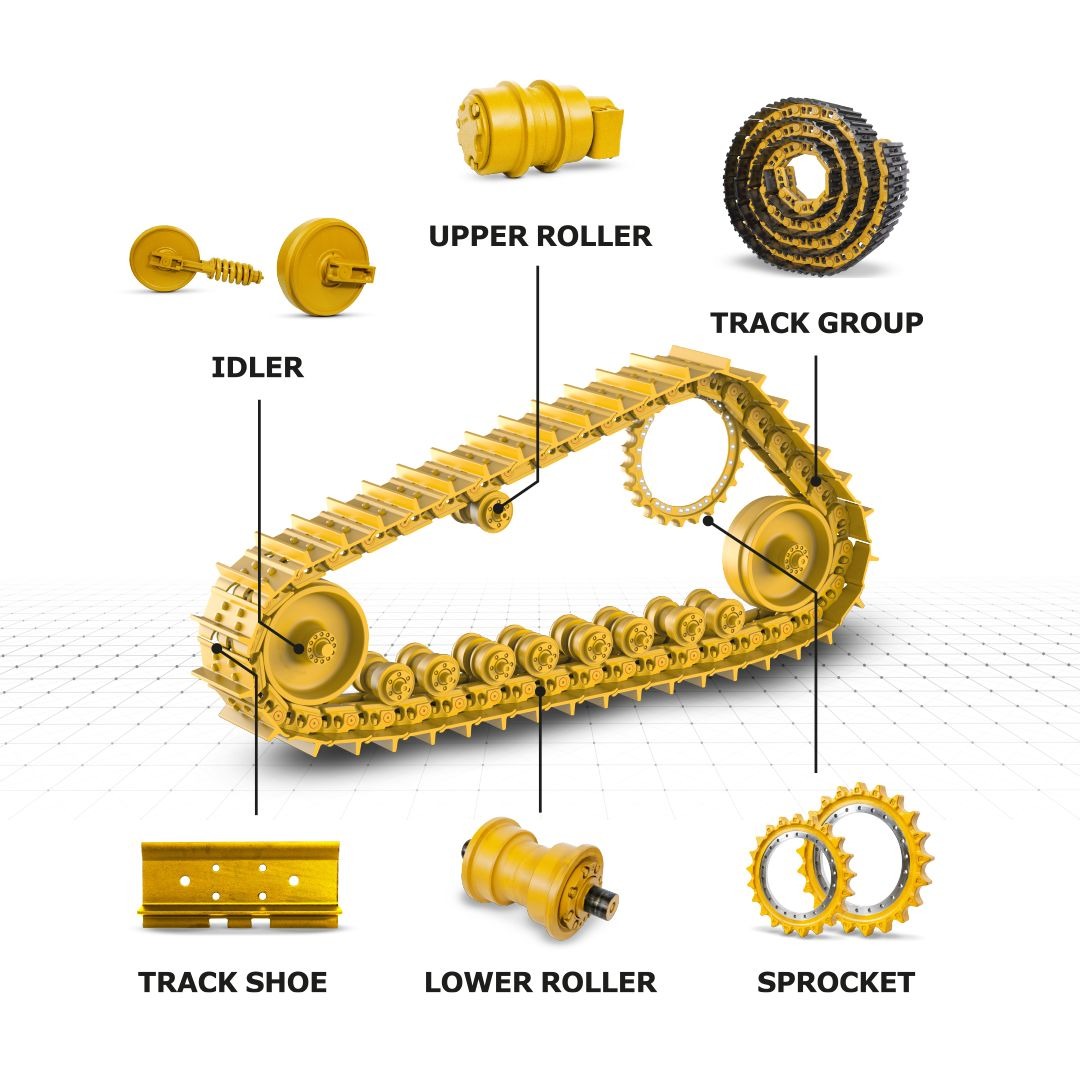
    The “Big Four” of the Undercarriage: Know Your Components

    Before inspecting, we must understand the key players:

    1. Track Chain: The metallic “road” on which the machine moves.
    2. Sprocket (Drive Wheel): Transfers the engine’s power to the chain.
    3. Idler: Guides the chain and maintains correct tension.
    4. Rollers (Bottom and Carrier Rollers): Support the machine’s weight and allow for smooth travel.

    The Essential Habit: Monitoring Track Tension

    A track that is too tight accelerates wear on pins and bushings; one that is too loose risks “de-tracking”, halting operations. Here is how to perform a quick check:

    • Cleanup: Remove mud or stones from the top of the track.
    • Positioning: Park on level ground.
    • Measuring the Sag: Find the highest point between the idler and the first carrier roller. You should see a slight curve (the “track sag”).
    • Warning Sign: A track that is perfectly straight, like a guitar string, is a symptom of excessive tension—the leading cause of premature sprocket wear.

    How to Read Sprockets: The “Shark Fin” Signal

    The sprocket is the thermometer of your undercarriage’s health. While a new tooth is thick and blunt, a worn tooth becomes thin and develops a distinctive hooked point.

    Warning: When teeth become “shark fins,” they begin to act like small chisels, grinding down the chain bushings with every rotation.

    Expert Tip: Sprockets and track chains should ideally be replaced together. Fitting a new chain onto old sprockets cuts its service life in half in a very short time.

    Conclusion: Proactive Maintenance Pays Off

    Moving from “reactive” maintenance (repairing when it breaks) to “proactive” maintenance (monitoring and planning) is the only way to effectively manage your site budget. A few minutes a day can save months of operational uptime.

    Does your undercarriage show signs of “shark finning” or oil leaks from the rollers? Don’t wait for a breakdown.

    Track Adjuster Assembly: Essential Undercarriage Component

    Every operator knows that the secret to a productive earthmoving machine lies in the reliability of its undercarriage. While the track chain and rollers attract attention, there is an essential component that works tirelessly to protect them from wear and damage: the Idler Group, which houses the Idler Wheel.

    Ecco la traduzione del primo blocco: “Every operator knows that the secret to a productive earthmoving machine lies in the reliability of its undercarriage. While the track chain and rollers attract attention, there is an essential component that works tirelessly to protect them from wear and damage: the Track Adjuster Assembly (or Idler Group), which houses the Idler Wheel. The Track Adjuster Assembly is not a luxury, but a fundamental safety mechanism. Its function is twofold and vital: to guide the track to prevent derailment and to absorb shocks to protect the chassis from overloads. Without an efficient tensioning system, the entire service life of your track will be drastically reduced.

    The Three Executive Roles of the Tensioning System

    When we talk about the Track Adjuster Assembly, we are talking about an orchestra of components that work together. The effectiveness of a Berco system lies in the synergy of its key elements

    1. Guidance and Alignment (The Idler Wheel): The idler wheel directs the track chain, ensuring its correct alignment. An optimized profile reduces friction and dirt accumulation, ensuring smooth rotation
    2. Impact Protection (The Spring Assembly): A preloaded spring acts as the true shock absorber for the tracked machine. When the idler wheel encounters a rock or an obstacle, it is the spring that compresses, absorbing the shock and preventing the destructive force from spreading inside the frame and to the other undercarriage components.
    3. Tension Adjustment (The Hydraulic Adjuster Assembly): Using a grease cylinder, the operator can adjust the track tension. By injecting grease, the system pushes the idler wheel forward; by releasing grease, the tension is reduced. This allows the correct degree of tension to be maintained, which is crucial for preventing abnormal stretch and premature wear of pins and bushings.
    Sottocarro

    Why Berco Quality is Non-Negotiable

    The constant pressure and exposure to mud, water, and dust make the Track Adjuster Assembly extremely vulnerable. A low-quality component fails first at the sealing system (seals), allowing contaminants to destroy the bearings and rendering the hydraulic adjustment ineffective.

    This is why choosing Berco quality is an essential investment. Their components are designed with:

    • Superior Sealing Systems: They protect the internal mechanism hermetically, even in the most aggressive environments.
    • Advanced Metallurgy: Heat-treated steel ensures that both the idler body and the adjuster rod maintain structural integrity under extreme loads and abrasion.

    Choose the Safety of the Complete System with Sampierana

    Don’t just replace a part—invest in a complete protection system. Sampierana UC Spare Parts, in partnership with Berco, offers you Track Adjuster Assemblies that are synonymous with operational longevity and maximum safety.

    We guarantee access to a complete and technically advanced supply, ensuring that the invisible shock absorber of your undercarriage always performs perfectly.

    Track links assembly: the Resistant Heart of Your Tracked Vehicle’s Undercarriage

    In the world of earthmoving machinery, efficiency and reliability are fundamental pillars. Every undercarriage component plays a crucial role, and among them, track links assembly represent the beating heart, ensuring movement, traction, and stability. Relying on robust and high-performing undercarriage spare parts is essential for those operating in the undercarriage spare parts sector.

    Why are Track Links Assembly Indispensable?

    They are designed to withstand high loads and operate in often hostile environments, such as construction sites, quarries, or agricultural terrains. Their complex structure, composed of links, pins, bushings, and rollers, works in perfect synchrony to:

    • Ensure traction: They allow the vehicle to move on different surfaces, even the most challenging ones, distributing weight and ensuring optimal grip.
    • Support the machine’s weight: They support the entire structure of the vehicle, absorbing stresses during work.
    • Ensure stability: They help maintain the balance of the excavator or bulldozer, which is fundamental for precise and safe operations.

    Key Components and Their Importance

    Track Group are a complex system, but understanding how their main components work together will help you recognize the value of a quality spare part. Each element has a specific and fundamental role in the efficiency and durability of your vehicle’s undercarriage.

    • Links (Pads): These are the elements that come into direct contact with the ground and provide traction. Their geometry and material are designed to maximize grip and wear resistance.
    • Pins and Bushings: These elements form the “backbone” of the chain, connecting the links to each other. They must resist constant shear and friction forces. Their coupling precision is fundamental for the durability of the entire track chain.
    • Rollers: They support the machine’s weight and guide the chain, allowing smooth sliding along the undercarriage frame.

    The Importance of Quality and Maintenance

    A superior quality track group translates into:

    • Longer operational life: Fewer machine downtimes and more useful life of the undercarriage.
    • Lower management costs: Reduction of expenses for frequent replacements and extraordinary maintenance interventions.
    • Maximum efficiency and productivity: The vehicle operates at its best capacity, without slowdowns due to undercarriage problems.

    Understanding the interaction between these components is fundamental to appreciating why the choice of quality undercarriage spare parts, such as our excavator chains, is an investment that pays off in terms of performance and operational durability.

    Sampierana UC Spare Parts: Your Support for Undercarriage Spare Parts

    Sampierana UC Spare Parts offers track group under the Sampierana and Berco brands. In both cases, we work to provide the highest quality materials. Our experience in the sector, gained over years of collaboration with earthmoving professionals, allows us to select products that guarantee lasting and valuable performance.

    Whether it’s an excavator, a bulldozer, or another tracked machine, choosing the right undercarriage spare part means investing in the continuity and efficiency of your work. We are here to support you, with the professionalism and attention that distinguish us, helping you find the most suitable solution for your needs

    Rubber track shoes and pads: products from the Sampierana U/C Spare Parts line

    Sampierana’s rubber products are suitable for tracked machines up to 20 tons and are divided into three types:

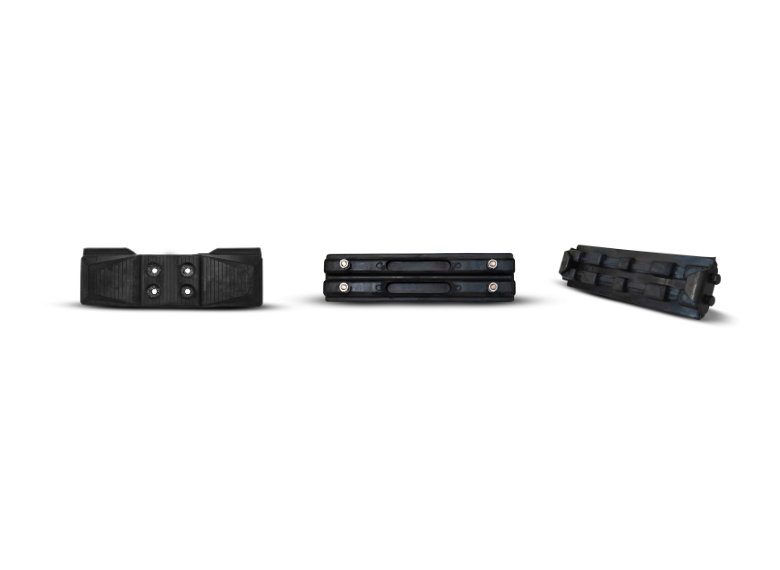
    • Bolt-on rubber pads, with bolt-on fastening to the track shoe;
    • Clip-on rubber pads, with lateral fastening to the track shoe;
    • Rubber track shoes like the Road-Liner/Geogrip models;
    Rubber Pads Sampierana

    The main features are:

    • Components that are easy to assemble and disassemble, even on the job site, especially the Clip-on type
    • Long-lasting and high-performance rubber compound;
    • Benefit from both the strength of the steel chain and the properties of the rubber;
    • Individual vulcanization and metal core

    What advantages do rubber pads and track shoes offer?

    • Traction and machine stability;
    • Prevention of damage to “delicate” surfaces such as concrete or similar floors, asphalt roads, and yards
    • Protection for the steel tracks applied to the machine;
    • Reduction of vibrations;
    • Noise reduction and consequently quieter operation, benefiting the operator;

    Bolt-on rubber pads

    They are installed on steel shoes bolted to the machine’s iron track. They are fixed by tightening a nut on threaded pins located on the back of the pads.

    Their width is identical to that of the steel shoe, which allows the machine to remain within its dimensions and maintain its maximum width, avoiding problems during transport and use in tight spaces limited by walls and curbs

    This is the most common type and is recommended for long-term work, despite being more complex and slower to assemble and replace compared to the CLIP-ON type.

    Clip-on rubber pads Clip-on rubber pads

    They are installed on steel shoes without external holes for BOLT-ON pad application. Application is via lateral clips, one fixed and one “mobile” with two fixing screws.This significantly reduces application and assembly time.

    It is advantageous for short-term use due to the speed of assembly and disassembly.

    ROAD-LINER/GEOGRIP rubber track shoes

    GEOGRIP or ROAD Liner track shoes are formed by a metal steel part coated with a layer of rubber integrated through a fusion process.

    They completely replace the steel shoe, as they are directly positioned on the chain via the four fixing screws, thus replacing the steel shoe.

    They are ideal when the priority is protecting the surface of use and when a machine must operate on roads and company yards. However, they are not recommended if the machine must operate on abrasive surfaces with rubble and debris.